


A gong rarely disappears into a song. And even when struck softly, it changes the air around the arrangement. This way, it spreads frequencies that feel less like a single note and more like weather moving through a room.
That quality explains why artists across within indie rock, alternative pop, and atmospheric music keep returning to the instrument. They are not chasing novelty. Rather, they are searching for scale and tension. Also, they want that kind of physical drama that ordinary percussion cannot always provide.
Still, volume represents only part of the gong’s appeal. While its attack arrives quickly, its overtones continue shifting afterward. Therefore, one strike marks a transition without forcing a rigid rhythmic pattern.
For instance, a drummer might open the sound gradually with a soft mallet. Or, they might hit it hard enough to make an entire venue feel briefly unstable. Either way, the gong creates movement inside otherwise static space.
Moreover, the instrument brings a degree of unpredictability. In fact, no two strikes bloom exactly alike. This holds particularly when musicians work with handmade Italian gongs. Basically, the tonal complexity and careful construction of these gongs add remarkable depth to studio sessions or live arrangements. That slight instability matters.
Meanwhile, modern production mostly sounds controlled down to the smallest detail. This way, an instrument that breathes and swells. Also, an instrument that occasionally gets a little unruly might feel unusually alive.
Japanese Breakfast’s “Paprika” offers one of the clearest examples. The song already moves with parade-like exuberance. Even then, the gong turns that celebration into something almost ceremonial.
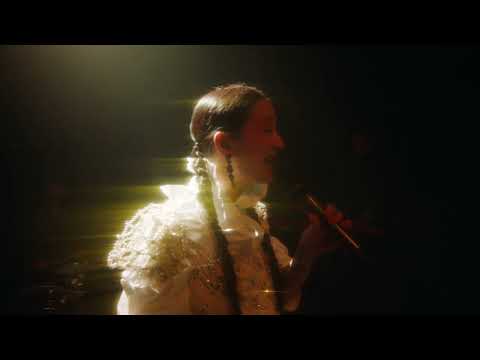
Not every artist approaches the gong through that same sense of bright spectacle. Instead, its purpose changes according to the music’s emotional architecture. Sometimes it crowns a chorus. Elsewhere, it darkens the edges, signals a transition, or thickens an atmosphere that might otherwise feel too clean.
Florence + The Machine uses the instrument in a particularly elemental way. On “What the Water Gave Me,” its resonance naturally belongs alongside the song’s imagery of surrender and uncontrollable force. Meanwhile, “King” uses percussive scale to support a different kind of confrontation. In fact, Florence Welch’s voice already carries enormous dramatic pressure. Consequently, the gong does not manufacture intensity. Rather, it gives that intensity more room to move.
On the other hand, Mitski takes a more restrained route. During orchestral tours and expanded live arrangements, gong and tam-tam colors might deepen the music without turning every passage into a grand announcement. That distinction is important because her songs derive most of their power from emotional compression. Therefore, the instrument works best near the edges. This widens the silence around a lyric rather than competing with it.
For artists such as Paramore, Manchester Orchestra, and Beach House, the gong reveals how differently percussion functions onstage. In fact, Zac Farro has used a large gong during the After Laughter and This Is Why touring cycles. In general, this has been for transitions or climactic punctuation. Essentially, Manchester Orchestra reaches a similar destination through heavier dynamics. Their songs mostly build patiently before breaking into dense, towering crescendos.
As a result, listeners may feel the texture before identifying its source. That subtle treatment proves the instrument does not always need a spotlight. Sometimes it should remain half-hidden. This way, it will do its work in the background.
Ultimately, gongs endure in modern alternative music. This is because they offer something both ancient and oddly contemporary. Basically, they interrupt predictable arrangements and make emotional peaks register in the body in a way that is unique.
In music increasingly shaped by precision and repeatability, that lingering uncertainty remains the real attraction. For instance, the room shakes, and the arrangement opens. Suddenly, the song feels much bigger than it did seconds earlier.


