


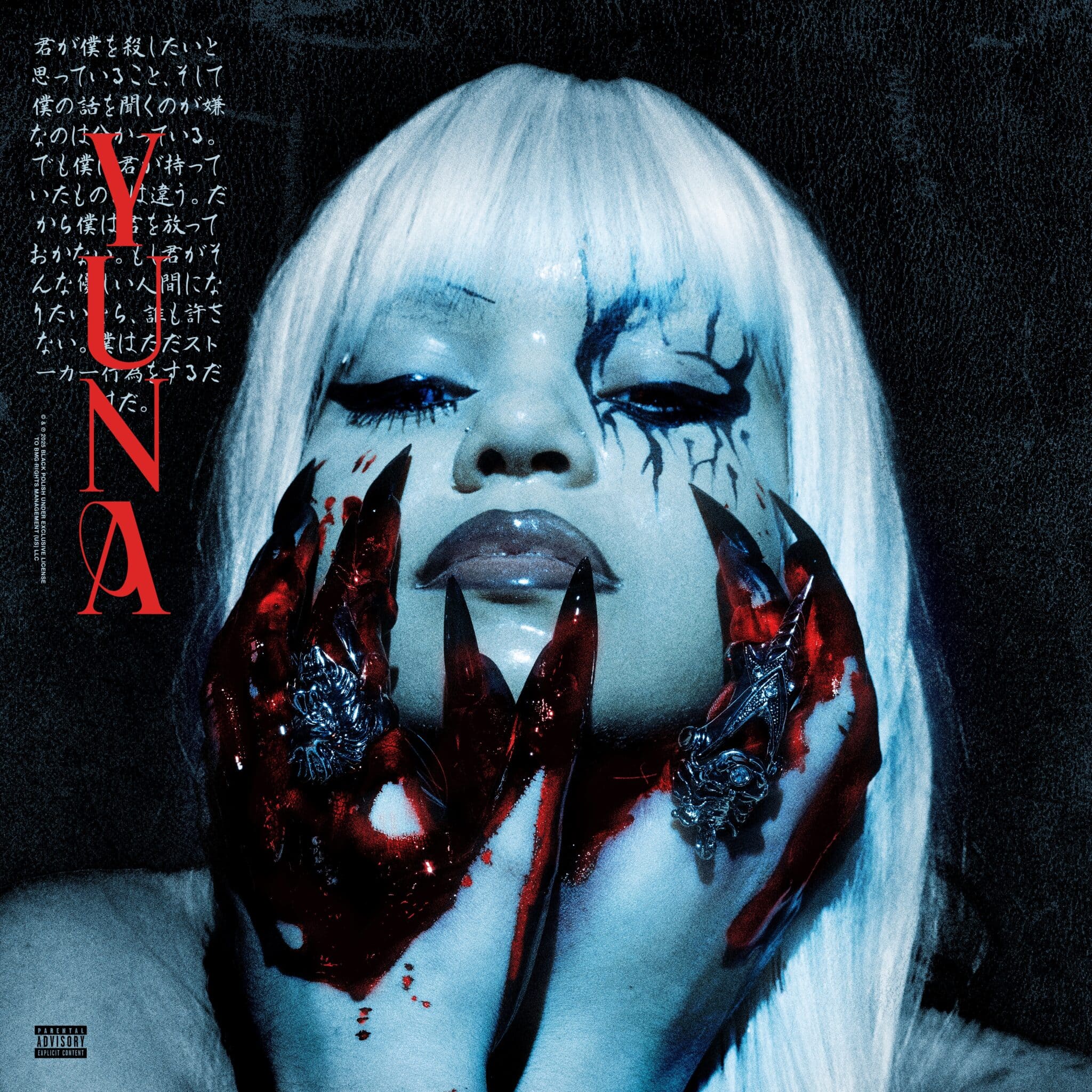
Reemerging as a deeply profound, darkly feminine creative force, Black Polish — the musical project of Jayden Binnix — shares their most profound body of work yet with the release of their sophomore studio album YUNA, out October 29 through BMG. A visceral concept album focusing on the character of Yuna, a sensually playful man-eating succubus serving as the alter ego of Black Polish, YUNA conveys this power struggle between Black Polish and their underlying, dark-sided persona.
Directly following Black Polish’s 2024 debut album Forrest, the singer’s latest musical effort continues to expand upon their ethereal artistry — one that combines poetic lyricism, enthralling world building, and a wide-ranging sonic landscape. Across 11 tracks, Black Polish interweaves a multitude of musical genres — everything from shoegaze, indie rock, nu-metal, and R&B — to deliver tales of obsession, identity, and rebellion.
While Black Polish has been pursuing music since the age of 5, they had their musical breakthrough with their 2020 single “Sophie.” They released their debut EP Out of Place in 2021 before dropping their inaugural full-length release, Forest, in 2024, and quickly defined their musicality is unforgettably intentional, authentic, and poetic.
Now, Black Polish dives deep into the unknown on YUNA. A non-binary artist, Black Polish explores the psyche of their hyperfeminine alter-ego, embracing a part of themselves that — while serving as a source of darkness — represents an undeniable source of power and confidence. The new record conveys a playful yet sinister fight between good and evil while also exploring the concept of forgiveness and accepting the haunted parts of your soul.
Following the release of YUNA, Black Polish will tour in support of the album this November, making their way across the U.S. through December. Ahead of the album’s release, Black Polish sat down with Melodic Magazine to discuss the discovery of their alter ego, musical inspiration, and if this is truly the last we’ll ever see of Yuna.
I’m so excited to chat with you today! The YUNA American tour was just recently announced — what are you most looking forward to with these shows?
Honestly, it’s just the fact that I’ve never done a headline show before, let alone an entire tour. I’ve been very blessed to build my live audience through opening slots, so I’m really excited to get that fan-to-fan connection in different states, because what I’ve learned is that every state is different in terms of fan interactions and just the vibe of everyone. And I want to go back to my hometown in Maryland. I miss it so bad.
Other than Maryland, any particular cities you’re most excited about in terms of the fans?
Probably Tampa, Florida, because there was this one fan who flew out to L.A. because I refused to go to Florida. Because I just don’t like going there. I grew up there, and I’m sick of it. But someone flew out here, and I was like, ‘Okay, I’m going to come to Florida.’ And I told her that. And she’s like, ‘Please let me know when you come. I will be there.’ So I really want to see that fan, because she came all the way with her family, and it was the cutest thing ever.
Of course the tour is in support of the new album, YUNA, which comes out October 29. I’m a sucker for a concept album, and it’s just such a cool body of work. It’s obviously about this alter ego, this character that you envisioned, and I was wondering when the character of Yuna first started to appear in your mind or take shape for you.
I started making this character when I was around 16 years old. Aside from music, I draw a lot. I’m an artist in all shapes and forms. So I made this original character who was supposed to be this super villain, and I called her Yuna, and originally she looked exactly like me. But with this album, I wanted to change how she looked. And I took inspiration from my pet rat, Ben. He’s an albino red-eyed rat, and I love him so much. So the look was inspired by the rat. And when I was making this album, it was centered around the feeling of obsession, and that super villain character was very obsessive. And I was just like, ‘Wait, what if there was an alter ego that came out with this album?’ And that’s how I put two and two together.
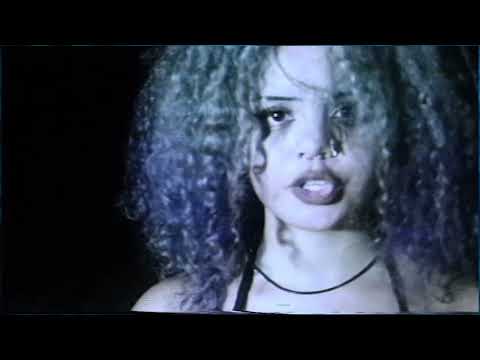
I love the combination of different influences. The character is a succubus, and is this more sensual, hyper-feminine character, and I was thinking about how certain characters or certain creatures like the succubus have such a negative connotation to them, like Medusa for instance used to have such a negative stereotype. But in recent years, all these different characters and creatures have a more positive image and they’re less misunderstood now. With that being said, what does the succubus represent to you?
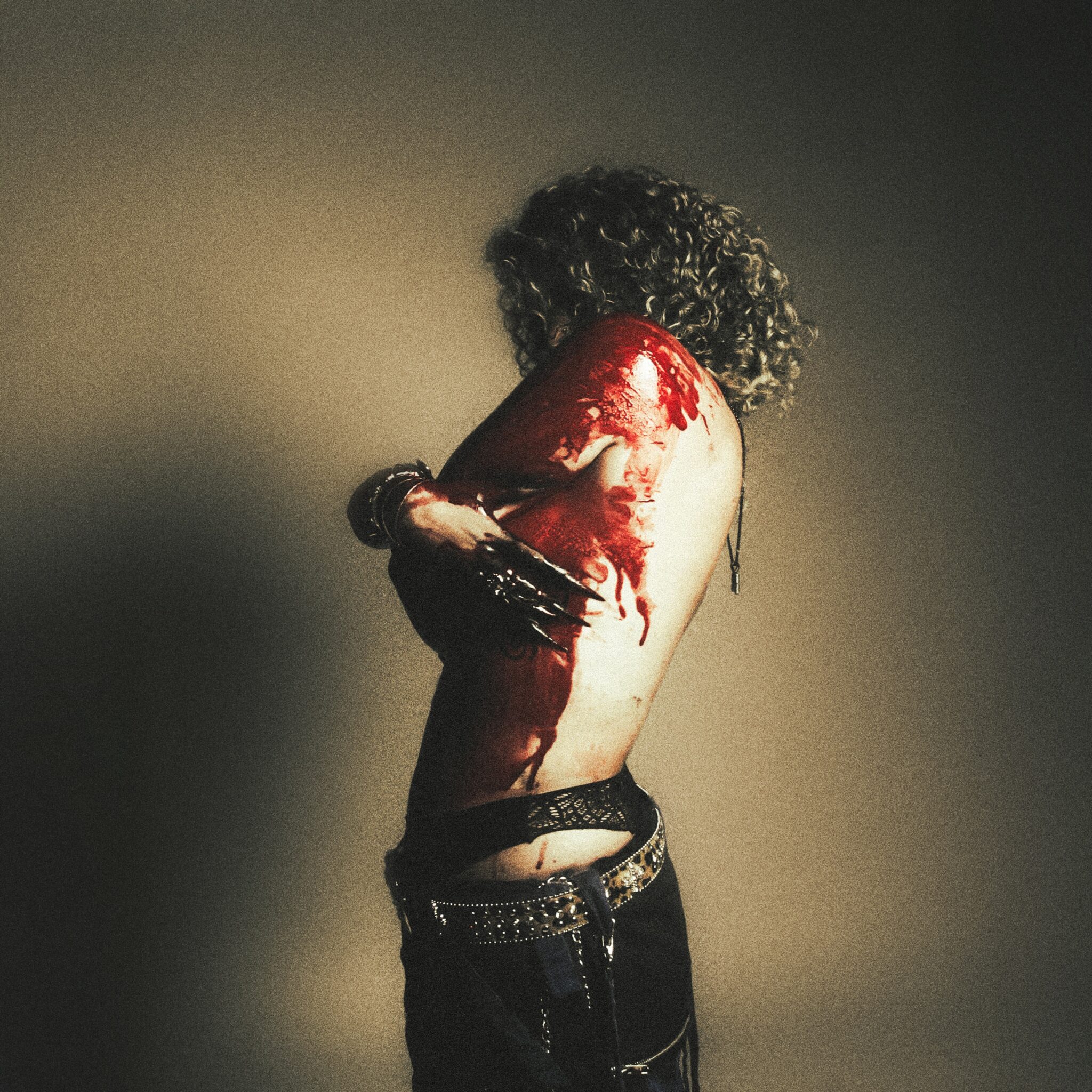
I am non-binary, and I grew up extremely masculine, and any type of femininity made me extremely uncomfortable. Honestly, whenever I felt feminine, I felt extraordinarily vulnerable and almost powerless. When I was arguing with my gender, I kind of saw femininity as a weakness and not a sign of strength. And when I hit second puberty, like from 17 to 19, I was starting to explore my femininity a lot more. Especially after moving to L.A., because you can be anything here. It helped me figure out how I wanted to express my gender, even on the days I feel feminine. Because on the days I felt feminine, I was shameful, and I felt gross about it. I would dress even more masculine. If I wanted to dress super revealing, I would wear like three layers of clothes every single day. But then I started wearing more revealing clothing as I became an adult, and I realized that femininity isn’t a weakness. It’s a strength. I thought femininity was a weakness because of who I was around, which was a bunch of toxic dudes, because I wanted to be a guy. But when I realized femininity can scare people and can make them feel powerless, that’s when I realized this is something I should be proud of. And that’s what Yuna represents to me. Her being a succubus, this hyper-feminine demon who wears little to no clothing, that is what the feminine side of me feels like. It’s not a gentle femininity. It’s very powerful because it’s not a weakness.
You’ve said that Yuna gives you more confidence too. She’s a darker version of yourself but also is a source of power. How do you find confidence, strength and power from Yuna?
I would say there’s a switch. While I was writing this album, I kind of pigeonholed myself into thinking, ‘Okay, I make a bunch of sad songs. I’m going to stay sad. But I also have to stay humble no matter what happens, because that’s the kind of music I make.’ With Yuna, with this alter ego, she originally took over in the studio. That’s where she came out, and my lyrics changed drastically. And when I heard those lyrics, I was like, ‘Oh my God, this is so new and bold and fresh and not a version of myself I show to the public ever.’ When you perform songs, I believe in manifestations. If you listen to sad songs and perform sad songs all the time, you’re going to believe those lyrics, you’re going to become those lyrics. But when I’m performing the Yuna songs, it’s completely different. I believe those lyrics and I feel so strong. Saying those words that I wrote in the studio over and over again, where she was created, really helps me sink in. And she comes alive on stage a lot.
Is Yuna someone that you only really become on stage or when you’re performing? Or is she something that you carry with you all the time?
She definitely is with me all the time. Honestly, she’s gone away for a little bit, but there have been times where she comes out. Again, the whole album is centered around being obsessed. So in that sense, if I’m feeling obsessive or possessive, that is when I feel Yuna. She’s a very chaotic kind of source. She’s ultra powerful. She’s honestly just a manic episode, and that’s usually when I feel her.
The power struggle between Yuna and Jay is expressed very well through the sound on the album as well, because it pulls so many different musical influences. How do you incorporate all these different genres, but still maintain your own unique sound on the album?
Honestly, I’m one of those people who’s like, ‘Oh, I listen to everything.’ And I felt a little pigeonholed with the genre I was doing. I was doing folk indie rock for the longest time, which is fine. I love all of those songs that I made. But when I listen to my favorite albums, or if I search for any album to become my new favorite, I always think, ‘Does this feel like a movie soundtrack? Does it feel like I’m watching a TV show as it’s playing?’ And not a lot of TV shows stick to just one genre. So, I knew this album was definitely going to be all over the place in terms of genre. And I was like, ‘I’m just not going to give it a genre. It is a story. It is a movie soundtrack.’ One of my dreams is to get into cinematography one day. So it’s always going to sound like me because my voice is on it and the mood has a through line. There is this angst that transcends genre. And the way I wrote it was that it progressively got from indie rock deep into EDM. And I kind of just blended all the instruments together. As the album goes on, eventually there’s zero guitar.
That shift throughout the record is just so cool. Were there any specific musicians too, or even different movies or film soundtracks, that inspired you when it came to this album?
I love Euphoria so much. Real bad. They use every single genre under the sun. I think Euphoria changed me when I saw it. I honestly started writing this album when that came out, because that was my life. Euphoria was describing what my life looked like. And the soundtrack, I would listen to it every single day, and it was so impactful to me. It heavily relies on the atmosphere of things, and I definitely wanted to capture that. I think that’s one of the most important parts of cinematography and music is the atmosphere. In terms of like music artists, I love Pastel Ghost. They’re my favorite person to stream all the time.
What was the brainstorming and songwriting process like for this album? Was it originally intended to tell such a cohesive story throughout?
Honestly, when I thought of the idea of this album, I instantly knew what every single song was going to sound like. I knew that it was going to be a story from start to finish. It has been my dream to create an album like this. So, when I’m in the studio, as soon as I hit the first chord, I instantly know what the whole song is going to sound like. It was so fun and so easy. And the people I created it with were so into the storyline too. I feel like that also pushed the narrative heavily, with all that collaboration.
You’re an artist who is so intentional with building an atmosphere. Even on your previous album, Forest, there was such a strong sense of world building. And obviously this album focuses on this one very important, powerful character. Once the album’s out and once the tour and this era is all said and done, do you think Yuna might come back? Do you plan that far ahead?
Yuna is an alter ego, so she’ll always be with me. And that’s all I’m going say (laughs).
Okay! (Laughter.) Going off of that, I was wondering if there were certain artists who are known for that kind of world building that inspire you. What inspires you to build an entire universe around your songs?
I just feel like if you can’t obsess over it and pick apart every little detail, what is the point? I even feel that way with TV shows or any animes that I watch. If there’s not a million details or a million subliminal messages that I have to listen a million times to get, I’m probably not going to be obsessed with it. That’s just how my brain works. Tyler, The Creator does this really well with all of his albums. There’s obviously a world, and all of them are so separate. You can learn what stage of his life he’s in during those albums. I really love that. Twenty One Pilots is really good at that. I mean, they have a whole universe centered around Trench, which is dope. I’ve been keeping up with that. Jujutsu Kaisen is an anime that has a million little details in it. And those are albums and shows that I go back to a million times over. And it’s like, that’s kind of the point of an album, is to come back to it and to be obsessed with it and to appreciate all the hard work that goes into it.
Going back to this idea of obsession, you say that’s what the album primarily focuses on. Obsession, even just that word, almost seems negative. I was wondering if you think obsession is a positive or a negative thing and, if it’s a positive thing, how do you spin it that way?
I think there’s good obsessions and there’s bad obsessions. But the whole album is based around self-forgiveness of that. Which is why, even though there’s a lot of negative things and events that happen throughout the album that shape me and Yuna, the ending sounds so bittersweet because you know you can make mistakes. You know you can have obsession. You know you can explore femininity and cringe at it, but you forgive yourself of all of that. And maybe the cycle of that album never ends, which is why I think obsession kind of comes and goes. And it was more so about self-forgiveness. I don’t know if I see it as a negative or positive obsession itself, but it’s just like, what are you obsessed with? And is it good for you? Is it serving you? In the context of the album, what I was obsessed with was not good for me in any sense. But I think it’s good for people to forgive themselves for doing dumb things.
Because it is such a personal album, was there any hesitation when it came to sharing this alter ego? What were the emotions like in that sense?
Absolutely. There’s a lot of crazy lyrics in there. There’s a lot of talk of gore, murder, violence. It’s obviously all metaphors and I’m not that kind of person, but that made me a little nervous because a lot of my lyrics are super-duper sweet, very PG Disney Channel level. But literally the first song on the album is talking about intimacy. I don’t talk about intimacy ever because, the thing is, when I was writing this album, it’s all about ages 17 to 18. That whole section of my life. And prior to that, I was a child making music. So there’s no need for me to write about intimacy. And I was thinking to myself, ‘Are people going to take this seriously? Are they going to take me being sexy seriously? Is that a thing that’s going to happen?’ That made me nervous. The violence made me nervous. Honestly, the genre made me comfortable. That part did not make me nervous. I don’t really worry about if my audience is going to like the genre or not, because I think everyone listens to every kind of music and it’s my voice at the end of the day. But those are the two things I was very nervous about.
You learned a lot about yourself on this album, but what do you hope listeners can learn or understand from listening to this album?
I would want them to learn self-love, learn self-expression and to know that things aren’t always going to be the easiest. You’re always going to come across obstacles and you need to practice self-forgiveness, grace and gratefulness in order to get through them. Things don’t stop. They just get easier with strength.
Pre-order YUNA here.
Buy tickets to BLACK POLISH’s North American tour dates here.
 Keep up with BLACK POLISH: Instagram // TikTok // X // Spotify // YouTube


