

Recommended Tracks: “nah,” “please don’t call (333),” “in plain sight”
Artists You May Like: Bazzi, Halsey, Troye Sivan
If you were in high school in the late 2010s, it’s more than likely that Khalid’s music was the soundtrack of your most formative teenage years and coming-of-age core memories. Eight years and three full-length studio albums into his music career, the king of R&B is making a pivot in his sound, re-emerging to save male pop once and for all with his most recent release, after the sun goes down.
Though Khalid does point out that parallels are apparent between his debut album American Teen and after the sun goes down in terms of storytelling regarding real-life experiences, this album sees Khalid enter a new phase of life, both personally and musically. It encapsulates what it means to be authentically accepting, embracing, and self-explorative.
After the unfortunate experience of having an ex publicly out his sexuality, Khalid took this as an opportunity to be more open and free than ever, unafraid of truly expressing himself the way he wants to. The process of creating after the sun goes down as an openly gay man has helped him fall back in love with making music, and this time he made it for himself, rather than for the sake of relatability, and, in his words on Zane Lowe’s show, “pleasing the masses.”
Filled with infectious hooks and an electro-pop sound, Khalid has described the upbeat, fun music he’s created as fueled by liberation and freedom. The pulsing energy that this album brings to the table engages listeners, refusing to let go, pairing perfectly with what Khalid is known for: his smooth, effortless voice that manages to make every song feel glossed-over.
The opening track doesn’t hold back in terms of the new, funk-filled sound that Khalid showcases, setting a bold precedent for the rest of the album. Up front and honest with a club-like beat, “medicine” confesses feelings of lust. It’s followed up by standout single “in plain sight” — both songs capture a sort of passion-filled chaos in both their tone and lyrics.

The first half of the album tells a story of having fallen for someone, experiencing infidelity, and the process of pushing to overcome these affectionate feelings because of it. “nah” continues this story with lyrics like, “I can’t relax when I fall into your trap / Always coming back / And oh, it’s a decision to trust my intuition / Let’s leave it in the past, so done with your ass.” Khalid’s shimmering vocals on this piece and overall chilled-out mood with the accompanying electric guitar to end it feel iridescent. This mood blends well with some of the other, more upbeat songs.
Having experimented with transparency in previous records like 2024’s Sincerity, it is abundantly clear with “angel boy” and “hurt people” that he continues on his journey of showcasing honesty in his songwriting. “angel boy” is cheeky and filled with what feels like young love wherein Khalid unapologetically leads with the raw emotions felt in connection. In “hurt people,” on the other hand, he laments the lack of a necessary, supportive connection. Both of these songs feel like nods to some of his older, more R&B-influenced songs sound-wise, yet they carry a more personal, vulnerable approach.
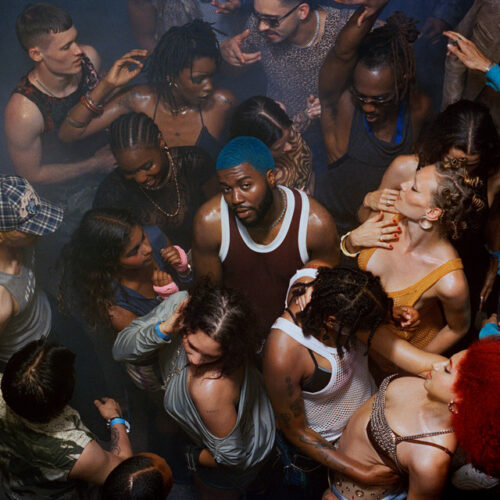
Tracks like “whenever you’re gone” and “please don’t call (333)” are good examples of dance-pop anthems that lead the album’s overall upbeat sentiment, and perfectly match the freely diverse, movement-filled cover art. Pulsing and filled with emotion, Khalid exemplifies how reinventing himself with this album pushes for the most real, authentic version of himself, taking his power back the only way he knows how: musical and personal expression.
after the sun goes down proves to be the most important transition in Khalid’s musical career so far, as the quiet relief of the ability to not only be, but also to share his authentic self speaks volumes; we’re thoroughly excited to watch him build on this liberated, vibrant version of himself.
Stream after the sun goes down here:


