

Recommended Tracks: “Burn Me,” “The Reaper,” “Enough”
Artists You Might Like: Chance Peña, Cameron Whitcomb, Noah Rinker
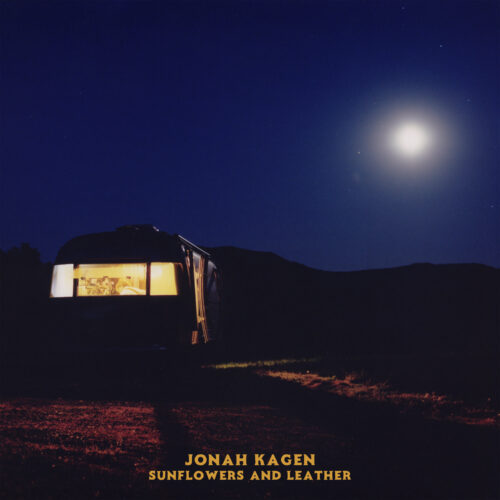
Making yourself uncomfortable is never easy. After a year spent in Miami, Jonah Kagen packed up his things and returned to his parents’ home in South Carolina until he got into a car crash that changed everything. After removing the couch and turning an Airstream trailer into a makeshift, mobile studio, he traveled across the country and returned with his debut album, Sunflowers and Leather. The album took shape as he traveled from South Carolina to Montana, soaking in stories, landscapes and heartbreaks along the way, with sunflowers standing for beauty and hope, and leather representing pain and resilience.
“I want to go chase these beautiful flowers, but I want to suffer too. That’s what Sunflowers and Leather is to me,” he says.
The album opens with “When My Ashes Turn White,” which sets the tone, seeing Kagen travel far and wide and ultimately letting his guard down across the country — from Miami to South Carolina to Montana and everywhere in between — to establish such a cross-country experience. On the title track, Kagen describes how he was born in sunflowers, shining a light on this home and beauty you’re trapped in when you’re a kid. Perhaps because the outside world, or the real world, feels so out of reach. He continues to describe this exciting kind of weary excitement on “Candy Land” as he finds someone he cares for but instead feels like a sore thumb (“You’re a bandaid I don’t stop to bleed”), saying that he’s just holding onto Candy Land, but it’s more of an illusion than his reality.

As he soon realizes how fast life moves, we see a glimpse of the leather Kagen has been describing. Kagen compares emotional pain and inner struggles to the old mining disease, black lung in a song fittingly titled “Black Lung.” As old miners suffocated underground, he describes feeling consumed by emotional turmoil and destructive relationships. Ultimately, his feelings are dismissed (“It ain’t real, boy, you’ll be fine”). Meanwhile, on “Anvil,” Kagen describes a mental low for him, feeling like the tool and singing, “This lesson can’t be worth all this goddamn mess.”
On “The Reaper,” Kagen also faces this self-destruction as he looks for freedom and meaning, told through the lens of someone running from home, chasing escape and colliding with danger along the way. He perfectly describes his travels out west as he only encounters confusion. He sings, “Slow up, child, you’re gonna get burned… you got nothin’ but time, you’re gonna live a long, long life.” Trying to outrun his demons, he is constantly reminded that life is long, and consequences always catch up — so as a result, he feels like he’s living like someone inviting The Reaper in.
Probing all aspects of the human experience, Kagen questions who is on “Belong,” describing how he’s feeling foolish and wondering where he belongs to begin this soul-searching album, starting to close the chapter of leather. Still finding it hard to move on, to let go of his pain, his self-destructive tendencies and his ghost in the wind, “You Again” sees Kagen remain haunted by a love that hurt him but still takes up space in his heart. That is, despite waking up next to someone else who should feel happy and whole. He sings, “I would love to love you, but this heart isn’t mine / ’Cause I gave it away to somebody who never gave it back,” showing how deeply that old wound runs. He’s essentially trapped between his past and his future — a haunting presence that feels like a ghost of his ex (“I feel you again”). The song is Kagen’s favorite song he’s ever written.
He’s finally told by someone, amid his travels, that yes, there will be light at the end of the tunnel on “Light in the End.” He sings, “She said, ‘One day you will grow up and one day you will find love and everything will be okay.” He somewhat comes to peace with the fact that it won’t always be perfect and that despite his past and his mental health, he will eventually reach the other side when he “grows up,” he sings.


