

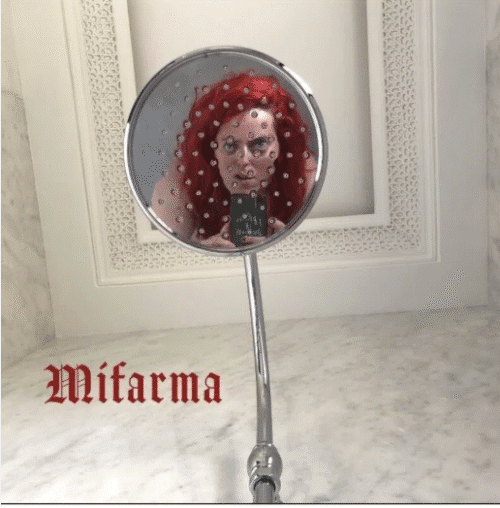
Mifarma exists in the quiet aftermath — the place where experiences haven’t resolved into neat narratives and healing hasn’t yet taken shape. Created by Danielle Alma Ravitzki in collaboration with producer Carmen Rizzo, the album lives between electronic and acoustic worlds, using restraint, intimacy, and silence as deliberate tools rather than aesthetic choices. Instead of offering a redemptive arc, Mifarma documents trauma processing in real time, grounding its emotional weight in physical sensation, fragmented memory, and unresolved stillness. In this conversation, Ravitzki speaks candidly about vulnerability, minimalism, and resisting catharsis, unpacking how Mifarma became less a story about recovery and more an honest record of survival as it unfolds.
The album sits in this space between electronic and acoustic elements—how did you and Carmen Rizzo approach finding that balance, and were there moments where you had to pull back from either side?
Finding the balance between electronic and acoustic elements was really an intuitive process for both Carmen and me. We were committed to creating a sound world that felt alive, something that breathed, even in its electronic moments, and something that pulsed, even in its most acoustic textures. Carmen has this incredible ability to build electronic landscapes that are textured and emotionally charged rather than cold or mechanical. At the same time, I come from a background where the voice and organic instruments carry the emotional weight. So the balance really emerged from our conversations about storytelling: What does the song want? What emotional temperature should it have? There were absolutely moments when we had to pull back from both sides. Sometimes the electronic layers felt too heavy and risked overwhelming the vulnerability of the vocal. Other times the acoustic parts felt too safe or too clean, and we pushed them into a more fragmented, processed space to match the psychological terrain of the song. We kept stripping things back until every element was serving the emotional core, nothing extra, nothing decorative. In the end, that tension between the synthetic and the organic became part of the narrative of the album itself. It mirrors the themes I write about, trauma, memory, dissociation, embodiment, all the places where the mechanical and the human meet.
Your vocals feel incredibly intimate, almost uncomfortably close. What was the recording process like, and did you have to work to achieve that stripped-down vulnerability or did it come naturally?
The intimacy of the vocals was very intentional, but it also came from a very real place. When we recorded, Carmen and I worked with extremely close-mic’d setups, you can hear the breath, the cracks, even the moments where the voice feels like it’s about to disappear. We wanted the listener to feel like they were in the room with me, or even inside my internal monologue.But the vulnerability wasn’t something I had to “perform.” If anything, I had to learn not to hide. A lot of the songs deal with sexual trauma, silence, dissociation, and the parts of the self that usually stay private. My instinct, at first, was to control the voice, to polish it. My mentor, Shara Nova, kept encouraging me to let the imperfections stay. The trembling, the uneven breath, the moments where the voice drops into a whisper. Those became the emotional architecture of the album. There were definitely times where singing that close felt almost confrontational, like I was exposing something fragile. But I realized that the songs needed that level of honesty. So the recording process became a negotiation between instinct and courage, qua learning to step aside and let the rawness live in the microphone. In the end, that stripped-down quality isn’t an effect we added; it’s a space we allowed to exist.
The album doesn’t follow typical narrative arcs of recovery or redemption. Was that a conscious decision from the start, or did the songs reveal that structure as you were creating them?
That was a conscious decision, but it was also something the songs insisted on. I’ve always felt that the traditional narrative of recovery, the clean arc from darkness to healing, from rupture to redemption, can feel dishonest. Real recovery is not linear, and it certainly isn’t tidy. It loops, it stalls, it contradicts itself. It has long silences and sudden eruptions. So from the beginning, I didn’t want to impose a redemptive storyline on experiences that never unfolded that way in my own life. Instead, I let each song be its own psychological moment, insofar as it’s a fragment of memory, an aftershock, a dissociated whisper, a moment of clarity. When you put those pieces together, they form something more like a map of survival than a narrative of triumph. As the album took shape, that structure, or lack thereof, became essential to its truth. The album lives in the space after the event, in the silence where you’re still trying to understand what happened to you. That’s not a heroic arc; it’s a human one. In a way, the absence of redemption becomes its own statement. It honors the complexity of trauma instead of forcing it into a story it doesn’t belong to.
You use very concrete, physical imagery rather than abstract metaphors. Can you talk about why grounding the album in tangible details felt important?
Concrete, physical imagery felt important because trauma lives in the body, not in abstraction. I tend to remember sensations, textures, sounds, the way something touched my skin, and those details hold the emotional truth more honestly than metaphor ever could. It’s also a way of refusing to obfuscate what happened. Abstract metaphors can create distance; they can turn difficult experiences into something symbolic and palatable. I didn’t want that. Using tangible details was my way of speaking bluntly, of owning the story instead of softening it. The body remembers in literal terms, and I wanted the album to honor that kind of memory: unfiltered, unprotected, and real.
Several tracks have a circular quality, like they’re revisiting the same emotional territory from different angles. How did you approach sequencing to make that repetition purposeful rather than redundant?
The circular feeling in the album is very intentional, because the aftermath of trauma is cyclical. You don’t move through it in a straight line, you circle back, you revisit the same emotional territory again and again, sometimes from a new angle, sometimes with the same ache. When I was sequencing the album, I wanted that experience to be part of the structure itself.The goal wasn’t to repeat ideas, but to show how they evolve, or even refuse to evolve. Each return to a theme shifts slightly: maybe the voice is more distant, maybe the production is more fractured, maybe there’s a new layer of clarity or numbness. Those differences mirror how people actually process trauma. You come back to the same place, but you’re never quite the same person encountering it. So the repetition isn’t redundancy, it’s recognition. It reflects the psychological loops that happen after harm, and the album touches that space deliberately.
The restraint throughout the album is striking—there are no big cathartic moments or dramatic releases. Was it difficult to resist those impulses, or was holding back always part of the vision?
I think we’re used to hearing trauma narratives framed around big cathartic moments, the breakdown, the breakthrough, the cinematic release. But the truth is that most of the aftermath happens in the quiet. It happens in the pauses, in the held breath, in the things you don’t say. So holding back wasn’t a limitation; it was part of the emotional architecture of the album. There were moments when I felt the pull toward a dramatic climax, because that’s what we’re trained to expect as listeners and as storytellers. But adding those releases would have felt dishonest. The world of this album lives in suspended emotion, the place where everything is charged but nothing resolves. That’s what survival often feels like. So resisting catharsis wasn’t about denying expression; it was about honoring the truth of the experience. The restraint became a way of staying close to the wound instead of jumping ahead to a moment of redemption that never really arrived. It’s a quiet record by necessity, not by accident.
What role did silence and space play in your creative process? Were there moments where you had to fight to keep things minimal?
Silence and space were almost like additional instruments on this album. So much of the emotional world I’m writing from exists in what isn’t said, the pauses, the dissociation, the moments where the body goes still. I wanted that to be audible. I didn’t want to fill every gap with production just because I could; I wanted the silence to speak.There were definitely moments where we had to protect that minimalism. It’s very tempting, especially in production, to add layers for the sake of fullness or drama. But every time we tried to add something, it felt like it pulled the songs away from their emotional truth. The quietness is the point. That’s where the vulnerability is. Carmen was amazing about trusting the power of space. He knows how to let a song breathe, how to let the tension come from what’s missing rather than what’s present. Keeping things minimal wasn’t about restraint for its own sake; it was about allowing the listener to hear the fragility, the breath, the unsettling stillness. Silence became a form of storytelling.
The album documents trauma processing in real time rather than retrospectively. How did you navigate the vulnerability of releasing something so unresolved?
Releasing something so unresolved was one of the hardest parts of making this album, but it was also the whole point. Most narratives about trauma are told in hindsight, once there’s distance and clarity. But the truth is that most of the time you don’t have clarity – you’re inside the fog, trying to make sense of what just happened to you. Navigating that vulnerability meant accepting that I wasn’t offering a lesson or a resolution. I wasn’t tying anything up neatly. I was documenting the process of processing, the confusion, the looping thoughts, the silence, the moments of dissociation,in real time. That’s an uncomfortable place to share from, because it exposes you before you feel “finished.” But I also felt a responsibility to stay honest, to not craft a narrative arc that would make the story easier to digest. Allowing the unresolved state to remain unresolved felt truer, and I trusted that listeners who have lived in that space would recognize it immediately. So yes, it was vulnerable, but it was a vulnerability that felt necessary, both artistically and personally. The album doesn’t offer closure because I didn’t have closure. And I didn’t want to perform one.
Were there any songs or moments that felt too raw to include, where you had to draw a line between honesty and overexposure?
Honestly, nothing on this record ever felt “too exposed” to include. I believe very deeply in owning up to what happened to you and refusing to hide behind metaphors. For me, exposure is actually therapeutic. Speaking bluntly, naming things directly, letting the body and the memory speak, that’s just how I process things. And I think listeners feel that. People connect more easily to work that’s true and unfiltered. When someone hears a story that hasn’t been polished or sanitized, they can recognize themselves in it. There’s something healing in that mutual honesty, I’m telling the truth of my experience, and that creates space for someone else to face their own. I’m also working on my next record, which Shara Nova will produce, and the lyrics there go even deeper. They’re far more exposed than anything on this album. So if anything, this record was a beginning, not the limit of what I’m willing to reveal.
Now that the album is out in the world, how does it feel to have people living with these deeply personal songs? Has the experience of sharing Mifarma changed your relationship to the material?
It’s a very strange and beautiful feeling to know that people are living with these songs. They came from such a personal, private place, almost like journal entries set to music, and now they’re out in the world creating their own meanings in other people’s lives. But surprisingly, that doesn’t make me feel exposed in a frightening way. If anything, it feels grounding. Because I’m committed to speaking plainly about trauma and owning what happened to me, sharing the album hasn’t created distance or discomfort. Honesty is the point. There’s something healing in letting the truth exist publicly instead of carrying it alone. And when someone tells me they see themselves in these songs, that recognition makes the vulnerability feel worthwhile. In a way, releasing Mifarma has shifted my relationship to the material. When I was writing it, the emotions were still raw and unresolved. Now that it’s out, the songs feel like they belong to a wider conversation, not just to my own processing. The album doesn’t feel like a wound anymore; it feels like a connection. And honestly, it’s also made me braver. Sharing Mifarma showed me that people don’t retreat from honesty, they move toward it. That’s changed how I write, and how much truth I’m willing to let into the work.

