

Recommended Tracks: “Twenty One,” “Zombie,” “The Icicle Melts”
Artists You May Like: Mazzy Star, The Smiths, Sinéad O’Connor
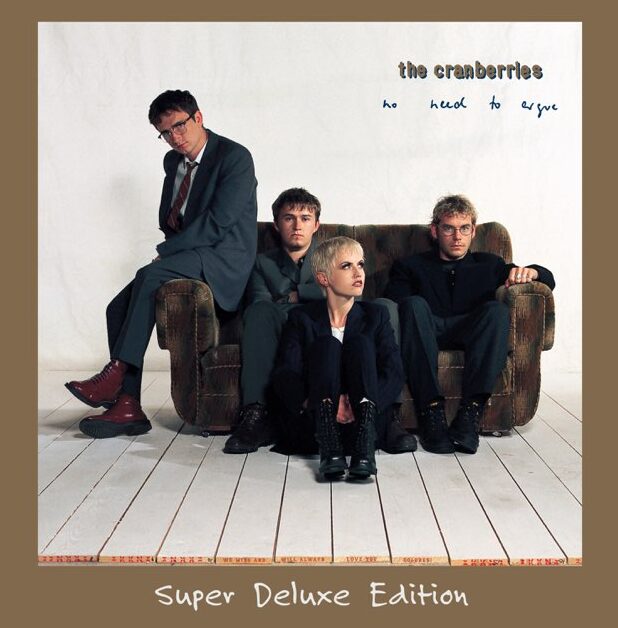
Known for being one of the most iconic alternative rock bands of all time, The Cranberries are back in full force in honor of their 30th anniversary of their album No Need To Argue.
The Cranberries were formed in Limerick, Ireland, in 1989 during the birth of the alternative and grunge underground scenes worldwide. The band initially featured Niall Quinn as the lead singer, but was soon replaced by Dolores O’Riordan. The lineup then solidified with O’Riordan (lead front woman and guitarist), Mike Hogan (bassist), Noel Hogan (guitar), and Fergal Lawler (drummer). The Cranberries took the industry by storm with their debut album Everybody Else Is Doing It, So Why Can’t We? with critically acclaimed songs such as “Dreams” and “Linger” peaking at #8 and #42, respectively, on the Billboard Hot 100 in 1994.
After multiple Billboard accomplishments came their sophomore album No Need To Argue via Island Records. Released on October 3rd, 1994, The Cranberries had established their signature sound starring the entrancing Irish folk vocals of Dolores O’Riordan. Released on August 15th, 2025, their deluxe edition of the record consists of 41 tracks, with performances ranging from Woodstock ‘94, Magic Shop Demos, and at the Royal Court Theatre in Liverpool, UK.
Three songs into the album, “Twenty One” is the perfect embodiment of what it means to turn a year older, embarking on the next chapter of early adult adolescence. Although this can seem anxiety-inducing, “Twenty One” is the epitome of self-discovery in pulling the listener into a three-minute trance of self-realizations on their way to independence. On the contrary, turning twenty-one can also mark a wonderful milestone — a golden birthday where cultures around the world can welcome new adults with open arms. As Dolores echoes the words “today” and “twenty one,” she seems to acknowledge how this next chapter in her life is inevitable, slowly turning her angst to acceptance.
Released as their first single from the record, “Zombie” is a call to action against the violence that was taking place in Europe at the time. O’Riordan spoke further on the meaning of the song during a live performance at The Astoria back in ‘94, expressing that “This song is our cry against the violence in London, against the war in the north of Ireland. And we want it to stop.” Listeners can further visualize and recognize her stance in the music video, which holds over 1.7 billion views to date.

The opening black-and-white scenes of Irish youth covered in ash switches to the colorful depiction of Dolores, portrayed as a golden figure near the Christian cross surrounded by golden children. This showcases a play on words depicting innocence and purity. As the song nears its end, the lyrics continue to circle back in the chorus, questioning “In your head / In your head / zombie, zombie, zombie-ie-ie / What’s in your head, in your head?” Here, zombies are symbolic and can be interpretations for different themes in relation to war, politics, violence, and how we perceive others in moments of crisis. For instance, zombies can be illustrated in a literal sense as brainless and apathetic killing machines. Or, they can be used as a symbol of those bearing witness to a governmental system that refuses to use its power to end a war that affects innocent civilians worldwide.
As we near the end of the album, track 37, “The Icicle Melts – Live At Royal Court Theatre, Liverpool, UK, 1994” begins to play. As the three-minute live version starts, you can hear Dolores open with the statement of how this song was written a year prior (1993) while the band was on tour. She dedicates the song to a young boy, James Bulger, who was murdered by two 10-year-old boys.
As the song progresses, fans hear the pure emotion and devastation in O’Riordan’s voice, belting the lyrics that would strike every audience member who has been through a similar loss: “How, how could you hurt a child? / How could you hurt a child? / Now does this make you feel satisfied, satisfied, satisfied? / I don’t know what’s happening to people today / When a child, child, child, child, he was taken away, taken away / There’s a place for the baby that died / And there’s a time for the mother who cried / And she will hold him in her arms sometime / ‘Cause nine months is too long, too long, too long.” From verse 2 to the chorus, the lyricism and rawness of the song speaks for itself.
All things considered, revisiting No Need To Argue after 30 years felt like re-discovering a time capsule that never tarnished. Dolores O’Riordan left this earth by giving us a gift of talent, being unapologetically herself, and speaking up for the underdogs. Their determination, like Dolores’, will forever live within the inspiring lessons The Cranberries gave to music culture.
Keep up with The Cranberries: Instagram // Facebook // TikTok // Youtube // X // Website


